
Winter Maintenance: How to Protect Your Awning or Pergola
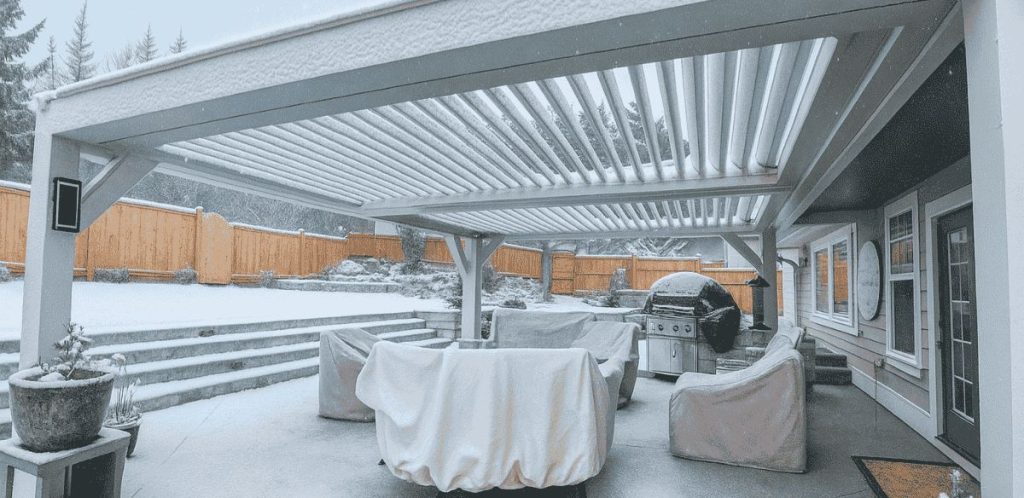
Expert Winter Maintenance Advice for Vancouver Island Homeowners
Winter maintenance for your awning or pergola is essential to protect your investment and keep your outdoor space looking its best year after year. You’ve invested in a beautiful structure that enhances your home, but winter’s harsh conditions can quickly turn that investment into costly repairs.
Winter on Vancouver Island brings damp weather, heavy rainfall, and the occasional snowfall. All these conditions can wear down outdoor structures if they aren’t properly cared for. The difference between a structure that lasts decades and one that fails after just a few seasons often comes down to consistent winter maintenance and early preparation.
Key Takeaways
- Clean your awnings and pergolas with water or mild soap, and ensure they are completely dry before winter storage to prevent mould and mildew.
- Inspect hardware, fabric, and structural components for damage such as rips, rust, or loose screws before temperatures drop.
- Retract awnings fully during heavy snowfall and use weather-resistant protective covers to minimize ice and snow buildup.
- Clear snow gently with soft tools, such as brooms, and avoid sharp scrapers that can damage fabric or coatings.
- Consider professional maintenance services for detailed inspections, deep cleaning, and custom protective solutions tailored to your structure’s materials.
Understanding Your Awning and Pergola Materials Before Winter Arrives
Before cold weather sets in, it’s important to understand which materials your awning or pergola is made from, because each requires specific winter maintenance.
While wooden pergolas are an option, they can require significant ongoing maintenance in coastal climates. Regular cleaning, frequent inspections, tightening of hardware, and reapplying weather sealants are often needed to prevent warping, cracking, and moisture damage. This level of maintenance is one reason many homeowners choose aluminum pergola systems instead.
Pacific Awnings specializes in aluminum pergolas, designed to withstand Vancouver Island’s damp winters with far less maintenance. Aluminum will not warp, rot, or crack, making it a long-lasting, low-maintenance alternative to wood.
For homeowners with modern aluminum louvered pergolas, you can enjoy superior weather protection and reduced winter maintenance. These high-performance systems are designed for year-round use, providing flexibility, durability, and easy operation even in cold or wet weather.
Understanding your structure’s materials and construction helps you choose the best type of protection and maintain longevity season after season.
Steps for Cold Weather Preparation
A proactive cleaning and inspection routine is key to protecting your outdoor structures from winter damage in coastal climates.
- Clean Thoroughly:
Avoid harsh chemicals. Using the wrong cleaners or chemicals on your awning can cause irreparable damage and corrosion. - Inspect for Damage:
When inspecting your awning, review the manufacturer’s instructions to avoid accidental damage to your unit. - Dry Completely:
Avoid using heat sources such as hair dryers or heaters to dry your awning; instead, thoroughly rinse and air-dry it before storing for the season.
For pergolas, prune back climbing plants to prevent excess weight and moisture buildup. Aluminum pergolas do not require homeowners to seal, stain, or adjust hardware, as all components are engineered for durability and should be serviced only by trained professionals if needed. Homeowners who want to reduce upkeep should consider upgrading to a motorized louvered pergola that allows for easy winter closure and improved moisture control.
Techniques for Proper Storage and Protection in Harsh Weather
When winter storms hit, how you store and protect your awning or pergola makes all the difference.
Fully retract your retractable awning during heavy snow or wind to prevent weight-related damage. If possible, install awnings beneath roof overhangs, or choose retractable or cassette-style systems designed for year-round use on Vancouver Island.
Throughout the winter, perform visual checks for wear, sagging, or shifting. Keep retractable parts fully closed, secure all hardware, and ensure power connections on motorized units are properly protected from moisture.
Adding wind and weather sensors provides additional peace of mind. These automated systems can retract the awning when strong winds or sudden snowstorms occur, preventing damage and reducing the need for manual intervention.
Strategies for Snow and Ice Management on Outdoor Structures
Heavy snow and ice can put significant stress on outdoor structures, making ongoing maintenance crucial. Waterfront houses may accumulate salty residue, and rain can cause leaves and other debris to stick or freeze to your awning. In short, the weather may cause your awning to age much faster without proper care.
Freezing temperatures may cause motors or joints to seize. Take care when operating your awning under these conditions to avoid accidentally damaging the system.
Even a few centimetres of snow can add significant weight to an awning. Retracting is the best practice to prevent unnecessary strain on the frame and fabric.
We recommended our thorough annual maintenance package, which includes lubrication, battery replacement (for sensors and remotes) and checking moving parts such as pulleys and mechanical arms. High-quality retractable awnings, such as those at Pacific Awnings, can last 20-25 years or longer with proper maintenance.
Professional Maintenance Ensures Year-Round Durability
While homeowners can manage basic cleaning and snow removal, professional services provide a higher level of care and expertise.
Certified technicians can perform detailed inspections to detect early signs of wear, corrosion, or mechanical issues. They also provide specialized cleaning solutions that protect finishes and fabrics without causing damage.
Professionals can tailor maintenance plans based on your specific awning or pergola type, local weather conditions, and installation setup. This proactive approach improves performance, ensures safety, and extends the structure’s lifespan, ultimately saving you money.
Whether you own a retractable fabric awning, a fixed structure, or a modern louvered pergola, professional maintenance is the best way to protect your investment and keep your outdoor space looking its best all year.
Frequently Asked Questions
- Do I Need To Take Down My Awning for the Winter?
No. Most awnings from Pacific Awnings are designed for year-round use. Make sure they’re clean, dry, and retracted during periods of heavy snow or high winds to maximize their life.
- What Should I Do With My Pergola During the Winter?
Inspect it regularly for snow buildup or shifting. Gently brush off the snow and ensure that all hardware remains tight. Reapply weather sealant as needed to prevent water damage.
- Can I Use My Pergola During the Winter?
Yes, especially if you have a modern aluminum louvered pergola. However, motorized pergolas should never be operated when snow or ice has built up, as this can damage the motor and internal components. Snow and ice should be fully cleared before operation. Adding side screens or heaters can extend your use of the space even further.
Protect Your Investment with Expert Winter Maintenance
Don’t let rain and snow shorten your structure’s lifespan. With regular winter maintenance and professional care, your awning or pergola can look and perform its best for decades. Pacific Awnings offers durable, weather-ready designs and trusted local expertise to help you enjoy your outdoor space year-round. Visit our Victoria or Nanaimo showrooms to learn more or contact us directly to request a quote or service.